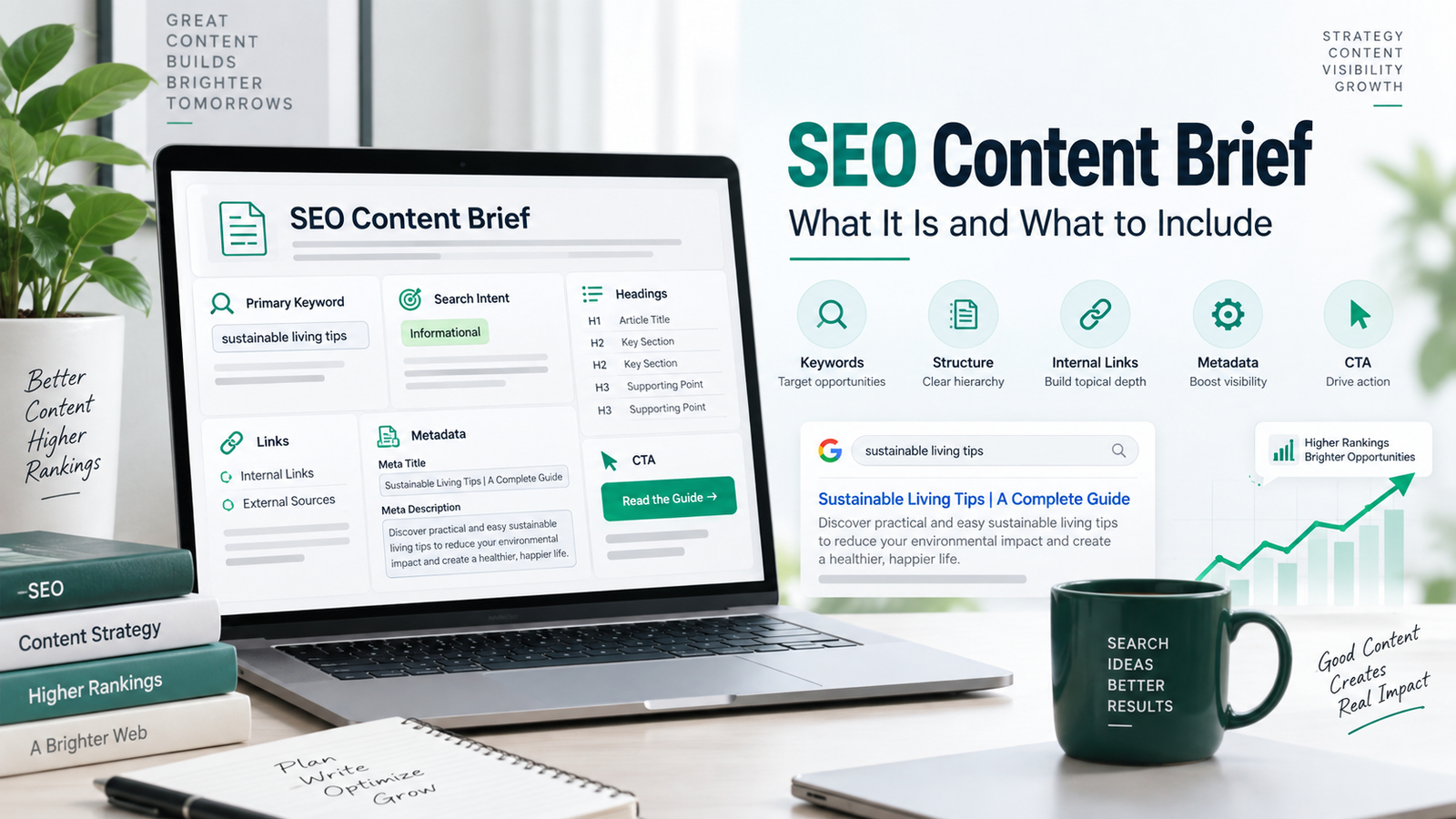
An SEO Content Brief is a document that tells a Content Writer what to create, who it is for, which search query it should satisfy, and how the page supports business goals. It improves results because it: (1) defines the Primary Keyword, Secondary Keywords, and Search Intent; (2) turns SERP Analysis and Competitor Analysis into a practical Content Outline; (3) specifies Content Structure, links, metadata, Brand Voice, and Call to Action; and (4) reduces revisions by aligning SEO, editorial, and subject-matter teams before drafting. It is not a keyword list or rigid script; it is an SEO Content Specification for producing useful, original content.
What Is an SEO Content Brief?
An SEO Content Brief guides an article, landing page, guide, or other asset. It connects Keyword Research and Content Strategy with execution by defining the reader’s problem, page purpose, target query, topics, and next action.
Google favors helpful, reliable, people-first content with original value rather than content created mainly to manipulate rankings. A good brief therefore gives direction without encouraging keyword stuffing or copied Competitor Content.
SEO content outline versus SEO content specification
An SEO Content Outline is the structural part: H1, H2, H3 headings, questions, and key points. An SEO Content Specification is broader, adding audience, intent, keywords, competitor gaps, length guidance, links, Meta Description, Brand Voice, technical requirements, and CTA.
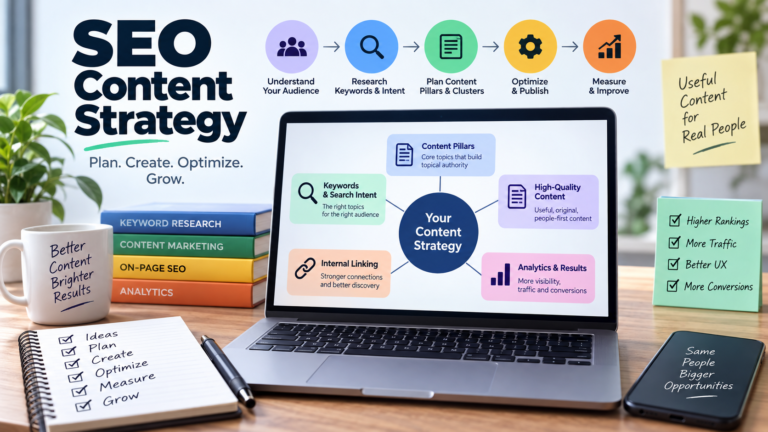
See this SEO content strategy guide and SEO Content Strategy resource. Strategy determines business needs; the brief guides one page.
Why Is an SEO Content Brief Important?
A brief prevents three common failures: targeting the wrong query, omitting important information, and producing content that cannot support a business outcome. It gives writers a clear destination and editors a consistent quality standard.
A detailed brief reduces revisions by defining the CTA, format, tone, and evidence requirements before writing. This improves workflow, Content Quality, and the chance of earning Organic Traffic.
How briefs support rankings and workflow
Search Engines need relevant, accessible, organized content. A brief aligns Search Intent, descriptive Headings, Internal Links, title, and Meta Description. It cannot guarantee rankings, but prevents strategic errors and clarifies ownership across SEO, writing, subject expertise, and editing.
How Do You Create an SEO Content Brief?
Begin with the business objective: awareness, education, leads, product research, or conversion. Then define the Target Audience, pain points, objections, preferred format, and next step.
Start with keyword and search-intent research
Choose one Primary Keyword that accurately represents the page’s topic. Add relevant Secondary Keywords, related questions, synonyms, and Long-Tail Keywords. Record Search Volume and Keyword Difficulty as decision inputs—not instructions to repeat phrases unnaturally.
Identify Search Intent: is the audience looking for a definition, instructions, comparison, product, service, or destination? Study first-page SERPs to see which Content Type Google considers relevant. “What is technical SEO” usually needs an explanation; “technical SEO consultant” may need a service page. Read this guide to Search Intent in SEO for additional context.
Analyze competitors and identify content gaps
Review leading Competitor Content for structure, depth, evidence, examples, FAQs, media, and conversion paths. Competitor Analysis should reveal gaps, not encourage copying. A useful direction might be: “Top results define the topic but lack an implementation checklist; include an original checklist and practical example.”
What Should Be Included in an SEO Content Brief?
Use a document, spreadsheet, or project template that is easy to scan. Include page type, objective, Target Audience, Keywords, Search Intent, length guidance, research sources, approval owner, and publication date.
Content structure and on-page SEO
Specify the working title, H1, H2 and H3 headings, questions to answer, and information order. Content Structure should answer the main question early, group points logically, and avoid sections created only for keywords.
Add On-Page SEO requirements such as natural target-keyword use, a concise Meta Description, descriptive URL, image alt-text guidance, and relevant schema. Google recommends clear titles, readable organization, useful content, and descriptive link text.
Links, anchor text, and calls to action
List exact Internal Links with useful Anchor Text, trusted External Links, source standards, and the CTA: subscribe, request a quote, download a guide, book a consultation, or read the next resource. For example, an ecommerce brief could link to out-of-stock product SEO when discussing product availability.
How Should You Format and Share the Brief With Writers?
Build a repeatable brief template
Use clear labels, short instructions, and research links. Avoid mandatory phrase lists. Explain purpose and audience before technical requirements, while leaving room for judgment and original examples.
Add voice, resources, and governance. Include Brand Voice guidance, words to use or avoid, approved sources, expert contacts, legal requirements, deadlines, and reviewers. If Generative AI assists, require human fact-checking and originality.
How Do You Evaluate and Improve an SEO Content Brief?
Before sending it, ask whether a writer could produce the page without guessing. Check the Primary Keyword, audience questions, competitor gap, Content Outline, and CTA.
Audit performance and improve future briefs
After publication, review rankings, impressions, clicks, Organic Traffic, engagement, conversions, and assisted conversions. If performance is weak, investigate intent, Content Quality, technical SEO, Internal Links, SERP presentation, and offer fit.
Update the brief when SERPs change, audiences ask new questions, competitors improve, or business priorities shift. This feedback loop strengthens Content Strategy.

Areesh Ishtiaq
Freelance SEO Professional helping businesses improve visibility across Google Search, Google Maps and AI-powered search.
Explore Areesh Ishtiaq
Frequently Asked Questions
Frequently Asked Questions
It aligns SEO goals, audience needs, editorial requirements, and business outcomes before drafting.
It should remove guesswork while remaining easy to use. Length depends on topic complexity.
No. Include the Primary Keyword, related terms, and Search Intent, but require natural usage.
For competitive topics, yes. Use them to study structure and gaps—not to copy Competitor Content.
No. Rankings also depend on Content Quality, technical SEO, authority, competition, and Google’s systems.