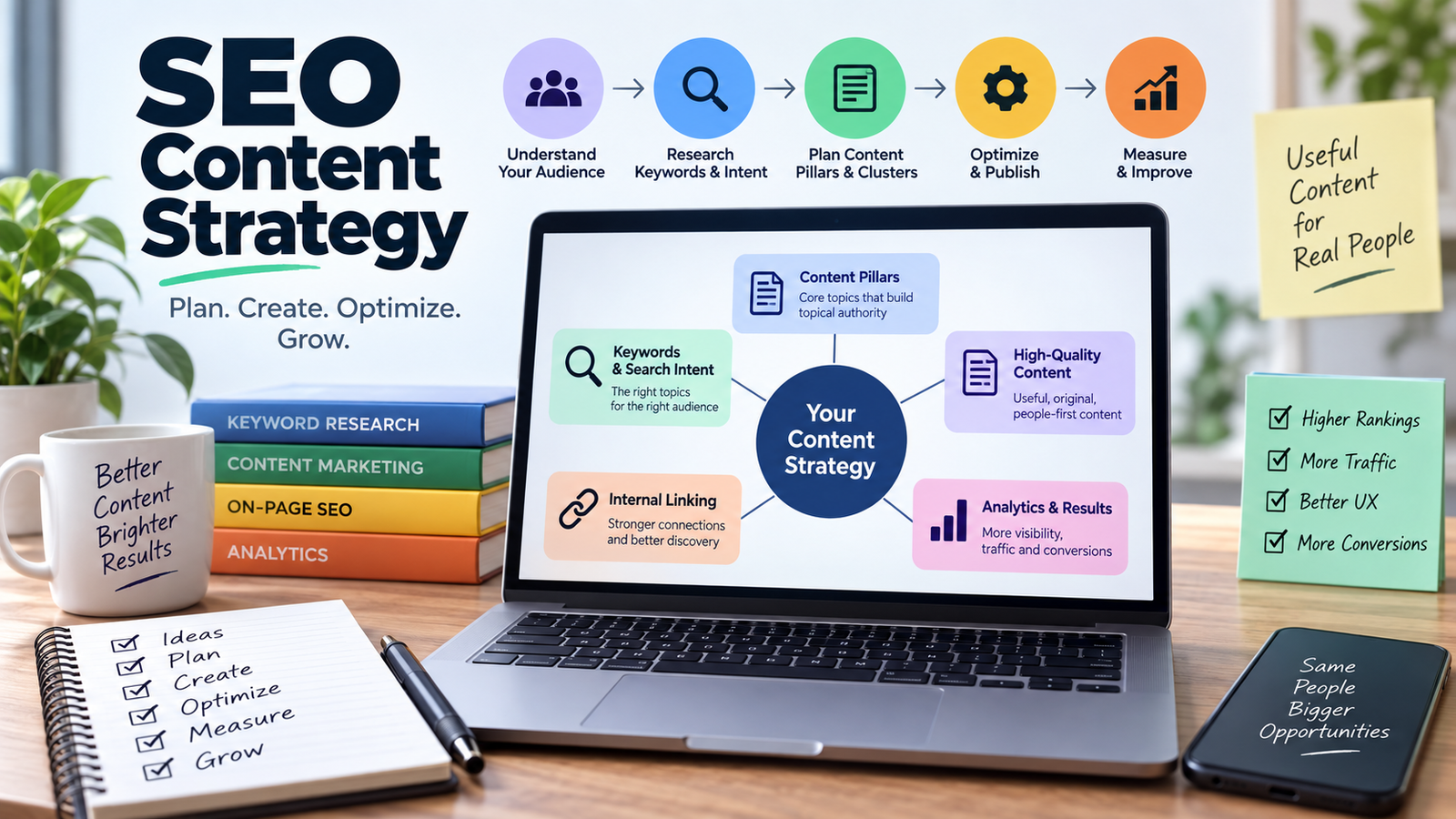
An SEO Content Strategy is a documented plan for creating, organizing, optimizing, publishing, and improving content so it meets audience needs and supports Search Engine Optimization goals. It works because it:
(1) connects Content Topics and Keywords to Search Intent;
(2) turns individual pages into Content Pillars and Topic Clusters;
(3) aligns Content Creation with a Target Audience and business goals; and
(4) uses Content Analytics to improve rankings, Organic Traffic, User Experience, and Conversions. It replaces random blogging with a system for useful content.
What Is an SEO Content Strategy?
An SEO Content Strategy defines what to publish, who it serves, which queries to target, how pages connect, and how Content Performance is measured. It combines Keyword Research, Search Intent, Content Marketing, On-Page SEO, and Internal Linking. See this SEO Content Strategy guide for a related perspective.
A list of blog ideas says what to write; a strategy explains why the topic matters, which journey stage it supports, and how it contributes to Search Rankings. Google recommends original, useful content for real audiences rather than content created mainly to manipulate rankings.
SEO content strategy vs. content marketing
Content Marketing uses content across multiple channels. An SEO Content Strategy is its search-focused component, connecting the brand’s message to Keywords, Search Intent, site architecture, and organic opportunities.
How Do I Create an SEO Content Strategy?
Start with business objectives and audience research. Decide whether the strategy should generate awareness, leads, sales, support, or authority. Identify the Target Audience’s problems, objections, knowledge level, and preferred formats.
Research audience, intent, and keywords
Keyword Research reveals Search Volume, Keyword Difficulty, Search Trends, and Long-Tail Keywords, but numbers do not explain intent. Review Search Results and classify queries as informational, navigational, commercial, or transactional.
“What is technical SEO” may require an educational guide, while “technical SEO consultant” may require a service page. Matching Content Type to intent improves Content Relevance. Read this guide to Search Intent in SEO.
Group queries into Content Topics and prioritize relevance, business value, and original expertise. Do not target every high-volume keyword; specific phrases can create more realistic opportunities.
How Should You Plan Content Pillars and Topic Clusters?
A scalable strategy organizes pages around a central subject. The broad page becomes a Content Pillar, while supporting articles answer narrower questions and link back to it. This Topic Cluster model helps users and gives Google clearer context about page relationships.
Build a roadmap and content calendar
Choose Content Pillars that reflect your offerings, expertise, and audience needs. Map definitions, guides, comparisons, examples, case studies, and troubleshooting pages beneath each pillar. Assign every page an intent, query, format, conversion goal, and Internal Linking destination.
Put the roadmap into a Content Calendar with owners, deadlines, publication dates, and update dates. Leave room for seasonal topics and new questions.
Connect pages with internal linking
Internal Linking should guide readers from broad information to deeper resources and commercial pages. Use descriptive anchor text and avoid isolated articles.
How Do You Optimize SEO Content?
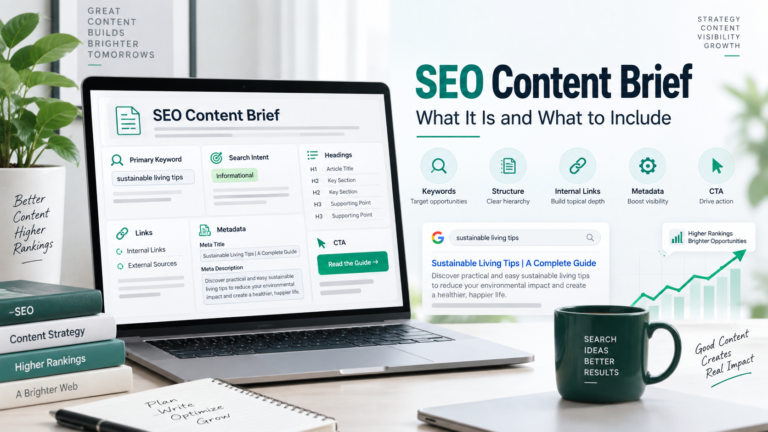
Content Optimization begins before writing. Create a brief covering audience, Search Intent, Keywords, questions, links, Content Format, and conversion objective.
Apply on-page SEO without keyword stuffing
Use a clear title, descriptive headings, concise introduction, useful images, accurate alt text, and a descriptive URL. Include the keyword naturally and cover related concepts rather than repeating one phrase.
On-Page SEO should support clarity, not make content artificial. Google says there is no preferred word count and warns against content created primarily for search engines. Write for the user’s need, not an arbitrary length.
Demonstrate E-E-A-T and use Generative AI carefully
Trust grows when content identifies its author, cites sources, includes first-hand experience, and avoids unsupported claims. These principles align with E-E-A-T. Google notes that E-E-A-T is not a single ranking factor, but systems use signals associated with helpful content.
Generative AI can assist with brainstorming, clustering, outlining, and workflows, but should not replace expertise, fact-checking, original analysis, or human review. Do not mass-produce pages.
Why Is an SEO Content Strategy Important?
A strategy builds topical relevance instead of disconnected pages. It can improve visibility, support customer-journey stages, and connect informational with commercial pages. Over time, it supports Organic Traffic, trust, and Conversions. See out-of-stock product SEO for an ecommerce example.
Measure content performance against business goals
Use Content Analytics to track impressions, clicks, rankings, assisted conversions, leads, sales, and revenue. Match metrics to purpose: an awareness guide may need impressions and assisted journeys, while a service page needs leads and conversion rate.
Do not judge every article by last-click conversions. A supporting guide may introduce a visitor who later returns through a product page. Analyze page groups and Topic Clusters alongside individual URLs.
How Often Should You Update Your SEO Content Strategy?
Review the overall strategy quarterly, but update pages according to topic volatility, performance, and business change. Evergreen content may need a six- to twelve-month review; pricing, products, regulations, and seasonal topics require more frequent checks.
Run audits and refresh content regularly
Use Content Performance data to find pages losing rankings, traffic, accuracy, or conversions. Refresh facts, improve weak sections, add Internal Links, strengthen evidence, and revise titles when Search Intent changes. Consolidate competing pages after assessing links and performance.
Content Freshness does not mean changing a date without meaningful improvements. Revisit the strategy when products, Target Audience, goals, or Search Rankings change.